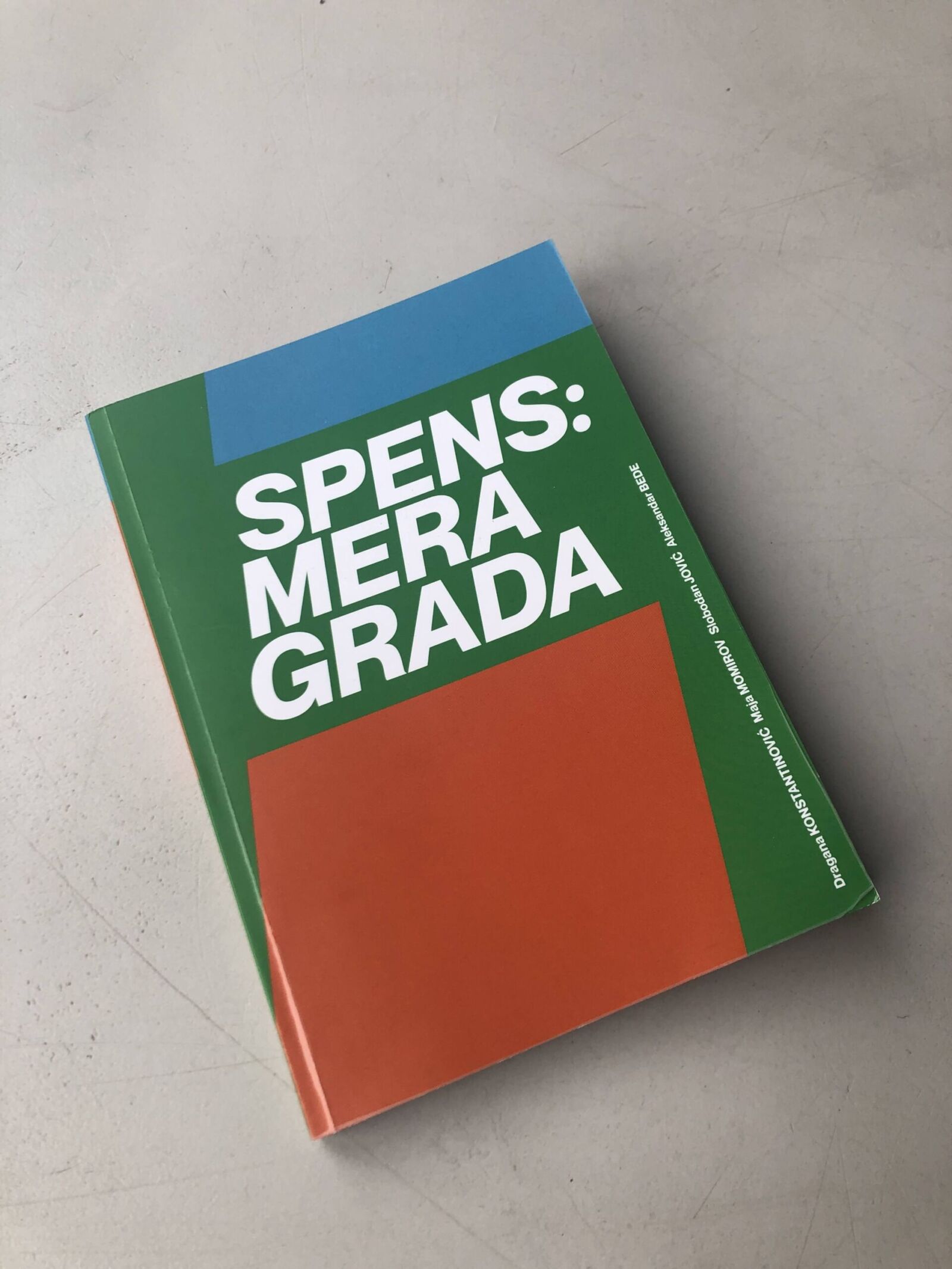
SPENS: Mark of the City
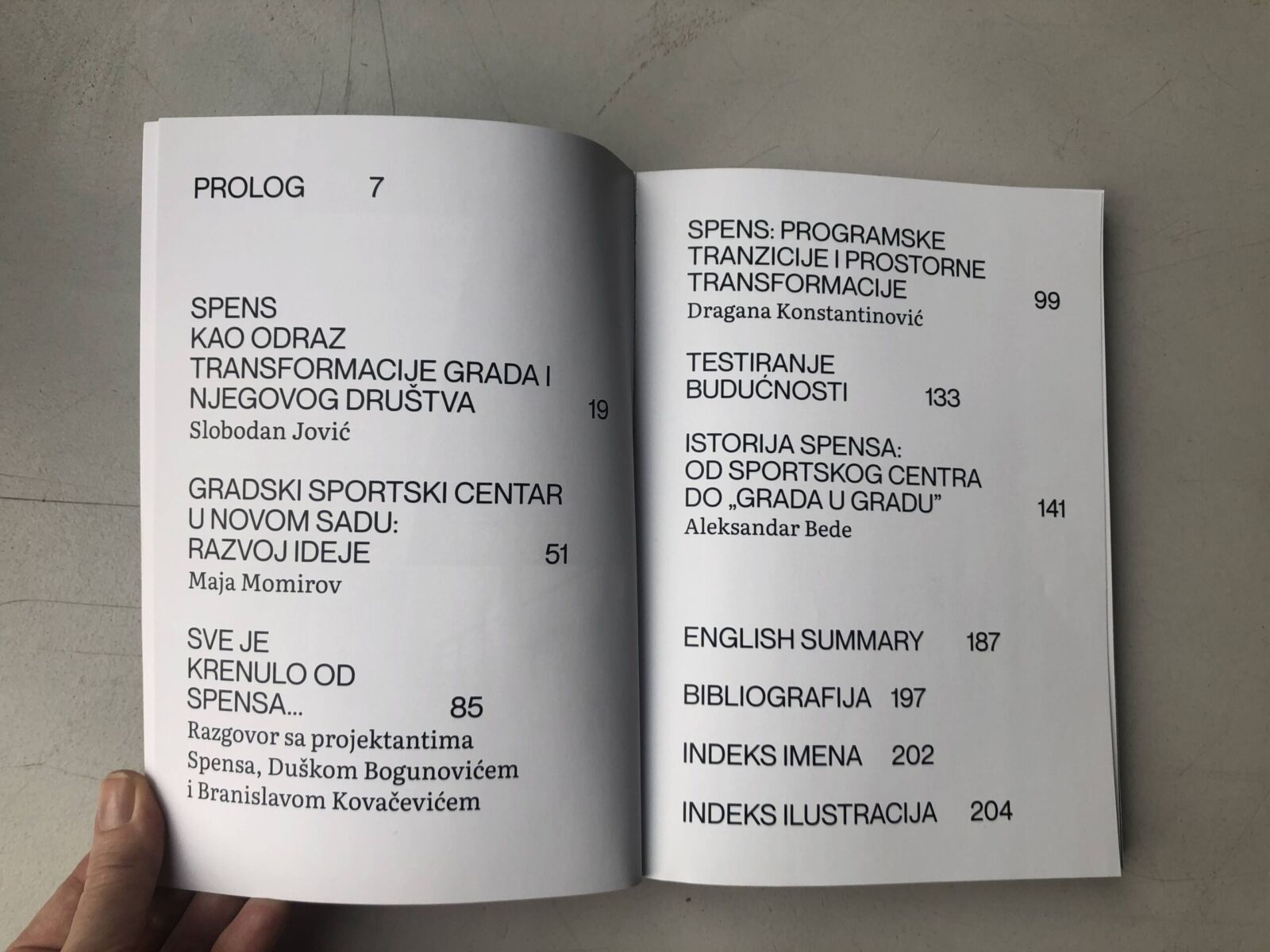
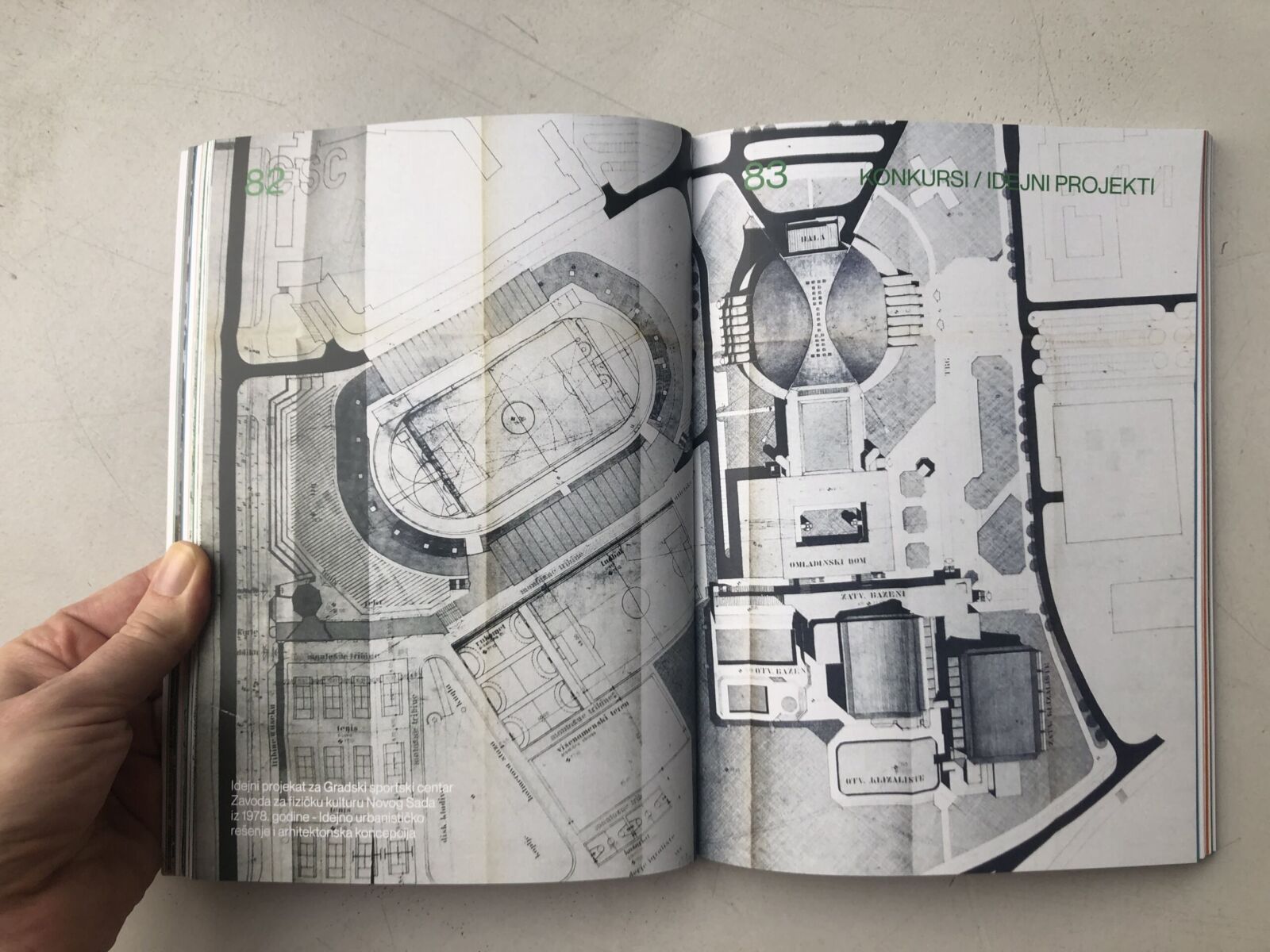
The book Spens: Mark of the City is the result of several years of work of its authors, relying on the efforts of other researchers, contemporaries, users, witnesses, and participants who also contributed to the understanding of the origins and continuity of Spens.
At a time when the fate of the building is somewhat defined by the current decision to reconstruct the building, this book attempts to reaffirm Spens’ relationship with the city, its citizens and the architectural profession. Understanding this house means dismantling the complex contexts of its creation: the politics and society that conceptualised and built it, the idiosyncrasies of the city of Novi Sad, as well as the province it is the centre of, financing and the concept of voluntary community tax, the technical and technological foundations of its efficient construction. In this way, it is possible to understand the motives, needs, expectations and results of the urban environment that laid the foundations for the development of the building, and went on to realise it. Therefore, the value and significance of the building lies, perhaps above all, in the reflection of the social conditions that created it, as well as the values that same society nurtured and incorporated into it. Precisely this is the biggest problem of its understanding and evaluation. If Spens is a “consequence” of the Yugoslav self-governing society, these epithets significantly determine its status as dissonant heritage in the present. On the other hand, observing the building outside this context takes away from the understanding of the highest principles of the subject matter— its modernising, humanistic and emancipatory function, which deems it both a reflection of the urbanity, and a place from which urban life develops.
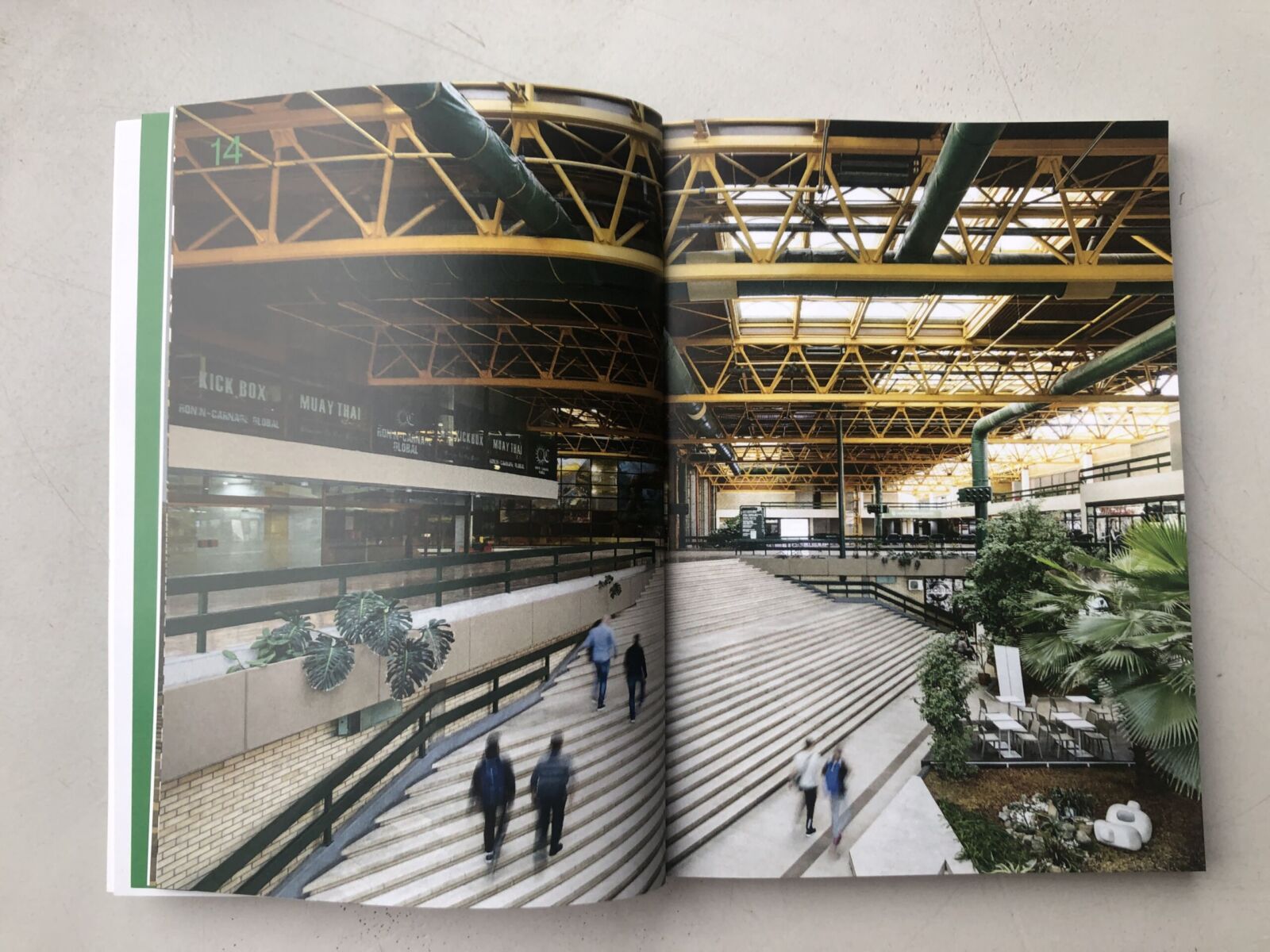
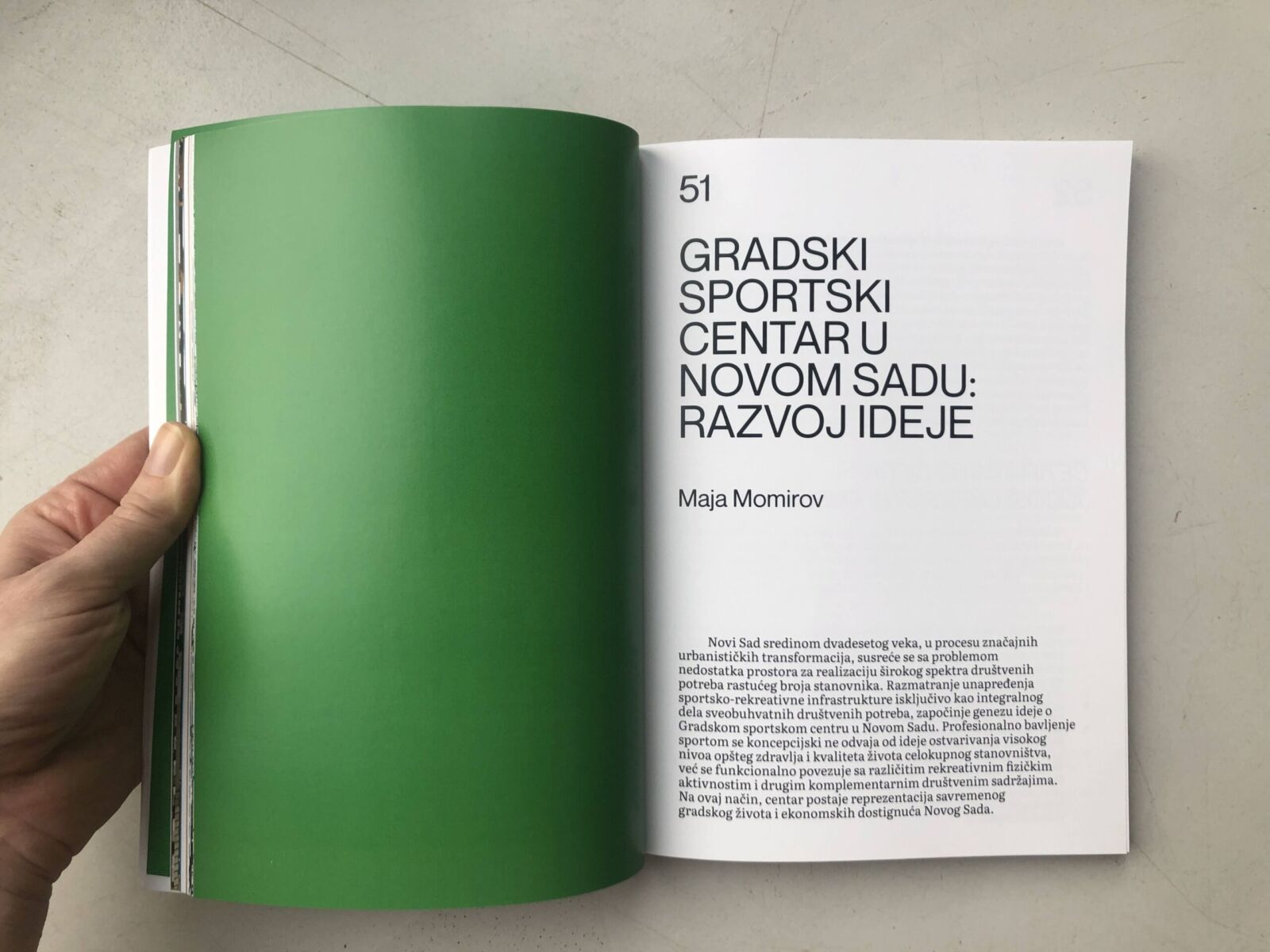
Another dimension of its evaluation is the complexity of this polyvalent building type, where sport represents the basis for the realisation of many social activities, with the idea of creating a new social centre. The architect, Živorad Janković, had researched the particularities of this type through a series of projects, instilling the experiences of other settings into Novi Sad’s Spens, which went perhaps the furthest of all, in presenting its mix of functions under one, common roof. With this, the building is recognized as a valuable work of Yugoslav modernism, exceptional not only for its programmatic determinations, but also for its technological solutions, which indicate the relevance of this architectural practice within Europe. The relationship of this megastructure with its surroundings are especially important, through the decision to place its urban potential at the centre of the concept. The coexistence of sport, entertainment, culture, commerce and pedestrian routes is regulated and composed through the specific relationships between different functional units, as the realisation of a unique vision of a sports landscape.
In 2021, Spens celebrated four decades of its existence; it survived the transition, with permanent evidence of its “struggle”—its battle for survival, improvisation, heedless usurpation and the effects of “top-down” decisions. Its contemporaries—the buildings of Janković’s Yugoslav architectural oeuvre, did not have such a fate. These processes have permanently masked the spatial qualities of Spens, propelling the building into a cycle of further decay, in which, as a commercially unattractive space, it has to “prove” its profitability in the new circumstances of its existence. Although Spens is not a shopping centre, today’s expectations seem to be unjustly oriented in that direction.
Although Spens’ “age” in regard to architectural duration is in fact adolescent, it is interesting to note that its history is full of unknowns. The available data, archives and research offer only a fragmented picture of the building, if we want to understand it in all its complexity. The accelerated process of construction with the rescheduling of the SPENS event from 1983 to 1981, fast-tracked the methods and procedures. On the other hand, the very specific contemporary outlook towards the entire corpus of Yugoslav architectural heritage still determines attitudes towards it—beyond the possibility of being viewed as heritage due to its recency, but also its socialist aura. Therefore, this book is an attempt to systematise, analyse and contextualise the currently available information, and create the first comprehensive professional analysis of Spens, with the hope that the texts, bibliography, list of archives and documents will be intriguing for new researchers to further explore the issue of this socially engaged building.
Nevertheless, this book is only partially historiographical. All our efforts to unravel the history of Spens were aimed towards a better understanding of its present, for the sake of its future. In all the formats in which we dealt with this facility, or organized events in it, we examined the potentials of the building for existing and new functions, in order to consider the scenarios of its future. In that sense, the idea of this book is to reaffirm our relationship with the building, so it can be understood as a mark (of the urbanity) of Novi Sad, a testament, sign, or even monument of modernity, in the past, present and future. The decision to reconstruct the building is a decision not to give up on nurturing the values that this architecture represents, beyond its “attached” socialist label. Therefore, the establishment of a new dialogue with Spens is not based on its conservation, but on its careful programmatic preparation for the next 40 years, sensitive to issues of public interest that are embedded in its genetics, while maintaining its spatial and formal integrity, as well as “programmatic and spatial constants.” The moment Novi Sad decided it needed Spens, is also the moment in which this story begins…
Authors